The Bofinger Chairs in the Rams‘ Garden
Gerrit Terstiege
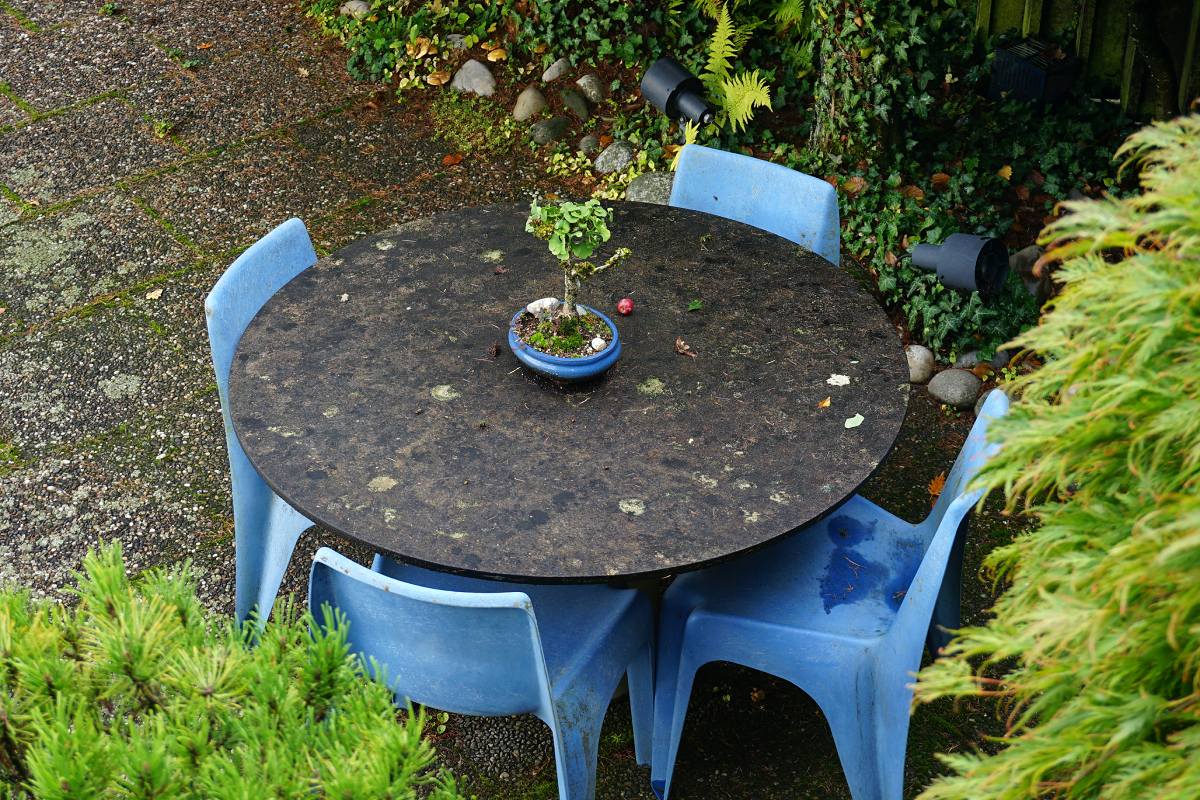
The Bofinger quartet in the Rams garden has aged gracefully – perfectly in keeping with the Wabi-Sabi principle valued by Dieter Rams.
© Cassandra Peters / rams foundation
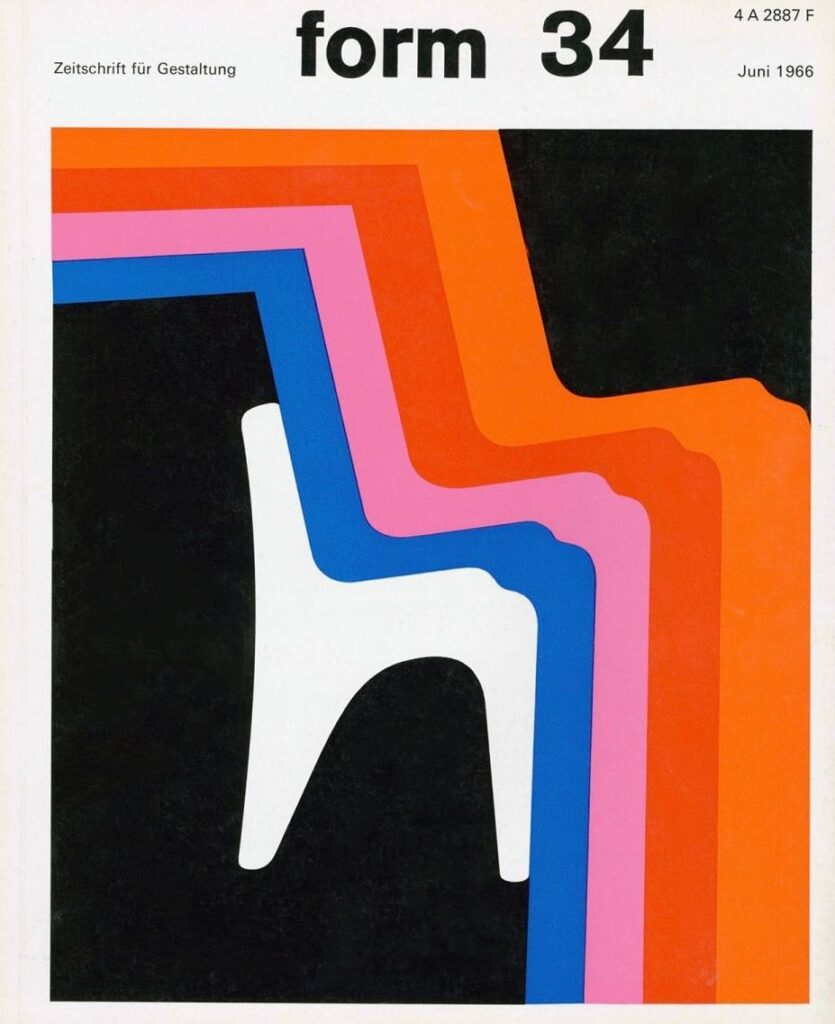
The Bofinger chair on the cover of form 34. © Verlag form
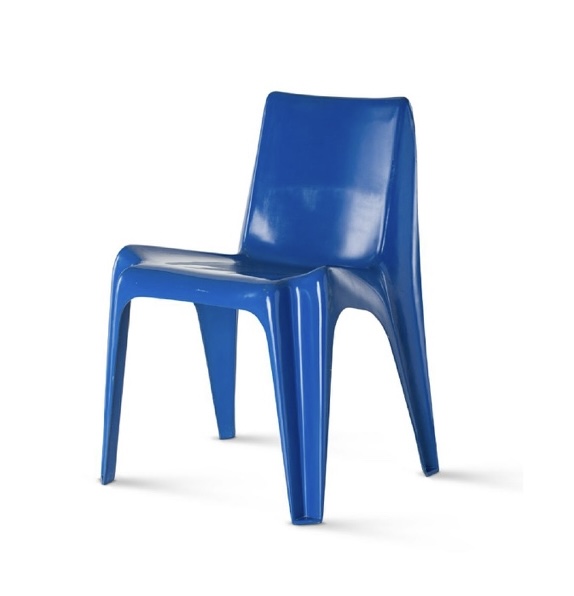
The BA 1171 from the VDM collection. © Vitra Design Museum, photo: Andreas Sütterlin
The Bofinger Chair, graphically presented by Karl Oskar Blase on the cover of form 34 in the summer of 1966, was a much-acclaimed innovation in the mid-to-late 1960s and is still relevant to design history to this day, having been the first chair to be made entirely of plastic. It has thus become the basis for numerous Monobloc variants, most of which are, however, unremarkable from an aesthetic perspective. The Bofinger Chair is less elegant and sculptural than the Panton Chair. Its manufacturing procedure is clearly apparent too. Why? The form was the outcome of meeting specific requirements: stackability and load-bearing capacity — along with what was probably the only sensible manufacturing method at the time. In the Atlas of Furniture Design, Mathias Remmele describes the term ‘prepreg’, a process used in the Bofinger Chair, as follows: ‘This involved the use of prefabricated glass fibre mats impregnated with through-dyed polyester. These were formed in a forged steel mould by employing a pressure of over 300 tonnes at a temperature of approximately 145 degrees Celsius. After the pressing process, which took just five to ten minutes, all that remained was to sand down the edges of the chair.’ The name of its designer has, sadly, fallen into obscurity today, for unlike the Panton Chair, it was not a Mr Bofinger who designed it, but an architect from Karlsruhe named Helmut Bätzner (1928–2010). Bofinger, however, was the name of the company that helped bring the first Monobloc to production and it distributed it for many years. Interestingly, the Bofinger Chair is closely linked to the Badisches Staatstheater, one of Helmut Bätzner’s renowned architectural projects. The architect wanted to design a flexible seating solution specifically for this cultural building, and began developing a lightweight and affordable stackable chair around 1964–1965. The rest is history. While the BA 1171 was a common sight in many cafés, hospitals and canteens, particularly in the 1970s, it seemed somewhat out of place in the high-culture setting of the state theatre. In fact, it was never used there, according to Remmele. Production began in April 1968 and was not set to end until 1984. However, other, even cheaper plastics that were less labour-intensive to process came into fashion. Its fate was therefore sealed. Yet, lo and behold: the newspaper and magazine articles referring to Dieter Rams, as well as the camera pans in film reports, have resulted in the blue version becoming particularly sought-after among Braun collectors. And so, even today, numerous examples are still cared for and are highly prized by their owners. Whatever the reasons may be, prudent long-term use, extending over decades, is better than any form of overhasty recycling.
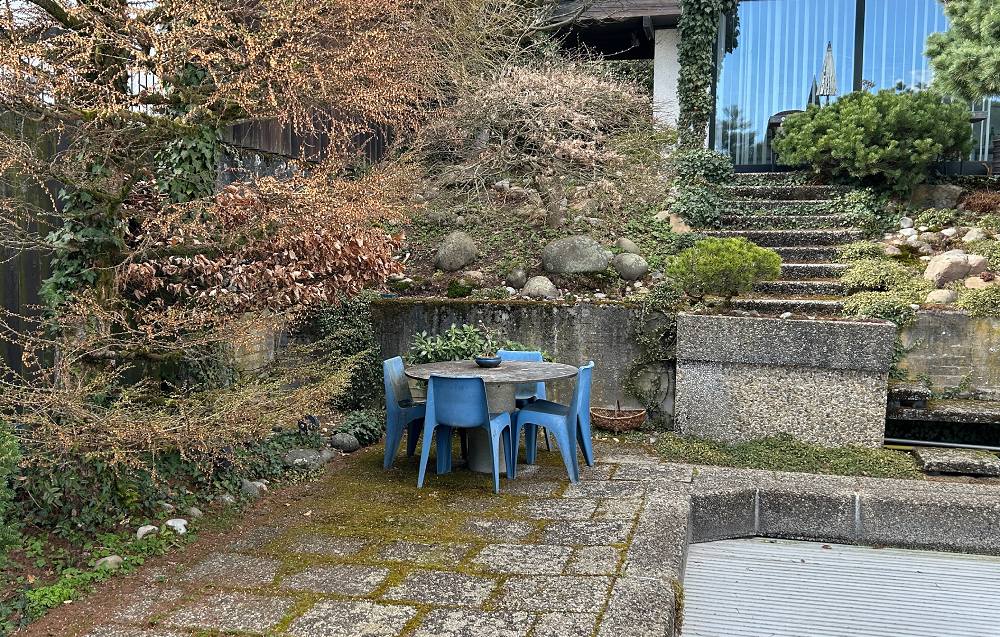
A wintry atmosphere: Since Dieter and Ingeborg Rams moved into their house in 1971, four Bofinger chairs have been an integral part of the thoughtfully designed garden. © Klaus Klemp / rams foundation
More contributions
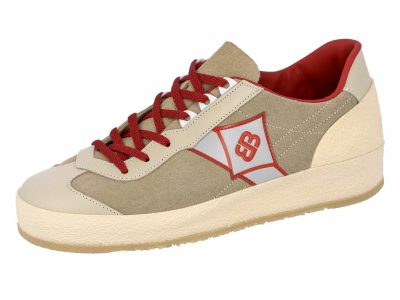
In the long Run: the Brütting Road Runner
The Road Runner, a simple, stylish running shoe that would also make history. It has been in production by Brütting since 1970. It’s the company’s best-known and best-selling model and is still made in Germany using traditional methods, that is to say, by hand. This is a rare situation in the sporting goods market, where most products are manufactured in low-wage Asian countries.
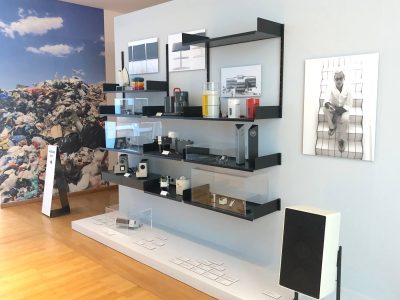
Durability: Design with a Long-Term Approach
In this series, we would like to present products that have stood the test of time on the market for decades. We wish to analyse which factors, materials and properties have contributed to an item being able to demonstrate exceptional durability in both functional and aesthetic terms — and not least in economic and ecological respects.