

In the long Run: the Brütting Road Runner
Gerrit Terstiege
We often have to go to great lengths to find good, simple sports shoes. The choice today is certainly greater than ever. That said, as in many other product segments, the vast range on offer is not exactly conducive to reaching one’s goal. When entering a sports shop today, Dieter Rams’ credo immediately comes to mind and one wishes for ‘less, but better’: the sheer plethora of shapes, colours, and materials employed by the various manufacturers, the frequently loud branding, and the excessive display of technical features are mind-boggling. Some may remember a remarkable and illuminating juxtaposition of images in the Süddeutsche Zeitung magazine: on one side was the Potsdam Einstein Tower by the architect Erich Mendelsohn, on the other, a modern sneaker. The observatory, which was built between 1920 and 1922, is known to be an early example of expressive and organic architecture. And it is precisely these forms with their many curves that can be found again today in the bulges and lines of generously foamed shoe soles, which are intended to cushion the weight of the runner by providing ever greater cushioning. Patterns, colours, perforations, lacing systems, and colourful decorative stitching are also often applied to the upper part of the shoe to create a dynamic composition of surfaces, so that the overall effect of the shoe is both sculptural and fast. The aim of all these features is to draw attention to the trainers, turning them into fashion statements and ‘conversation pieces’ for making an impression, regardless of how fit and athletic the wearer is. Seeing such a display of futurism in footwear leaves one longing for the simple, light-coloured running shoes worn by the astronaut who famously goes jogging in the spaceship of Kubrick’s 2001: A Space Odyssey.
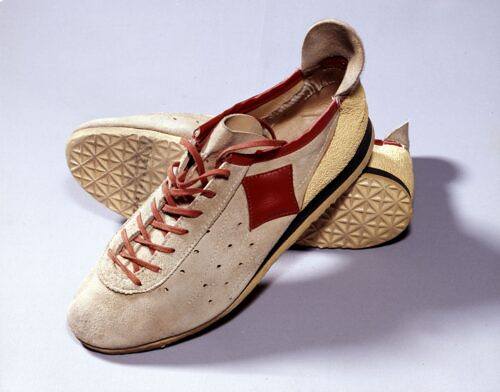
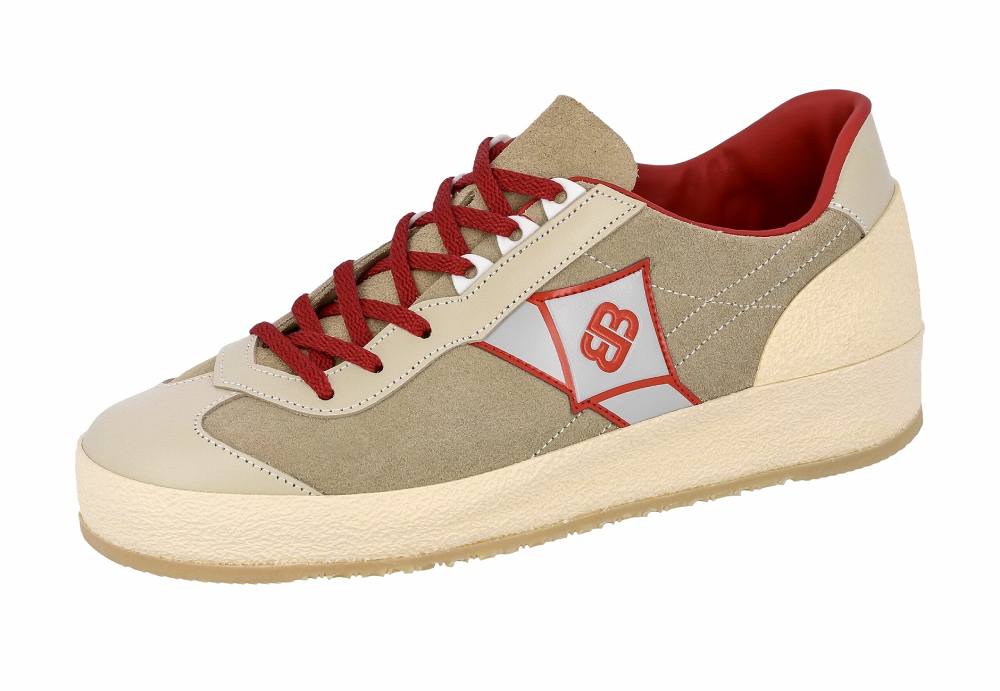
On the left, the historic Brütting Road Runner version (1970) from the collection of the Sportmuseum Berlin, donated by Werner Sonntag. © Sportmuseum Berlin. On the right, the current model. © Brütting
Around the time this classic film came out in the late 1960s, people in Upper Franconia were working on a simple, stylish running shoe that would also make history. It has, in fact, been in production by Brütting since 1970. It’s the company’s best-known and best-selling model and is still made in Germany using traditional methods, that is to say, by hand. This is a rare situation in the sporting goods market, where most products are manufactured in low-wage Asian countries. In 1972, Bernd Kannenberg won gold in the fifty-kilometre race at the Munich Olympics wearing these very shoes. Instead of gel padding or foam soles, the fairly hard cushioning is achieved by employing three layers, which was indeed a siginficant innovation over fifty years ago. On one distributer´s website, where the shoe is sold, among other places, they openly address accusations that the Road Runner is not comfortable enough by today’s standards: ‘Since we added Brütting leather running shoes to our range, it has been said that this is detrimental to the joints of our unsuspecting customers because we are depriving them of the blessings of midsole compression gel sole technology, which is brought out annually over decades. It has always surprised us that running shoes from the 1960s are now considered a major orthopaedic risk, because in the time that has passed since then, little has changed in terms of anatomy and road construction, but a lot has changed in sports fashion marketing.’ Irrespective of personal preferences, it is important to remember that very few people will ever run 50 kilometres in one stretch, but they will appreciate the advantages of a classic, elegant sports shoe in day-to-day life. And unlike the invented, brand-new retro designs of other manufacturers, the understated, almost functionalist design of the Brütting Road Runner has proven to be truly enduring. The lasting success of the design can also be attributed to the clever choice of materials, its simple construction and the meticulous workmanship of the shoe, which ensures that it can still be repaired even after many years. A shoe that delivers what it promises — no more and no less.
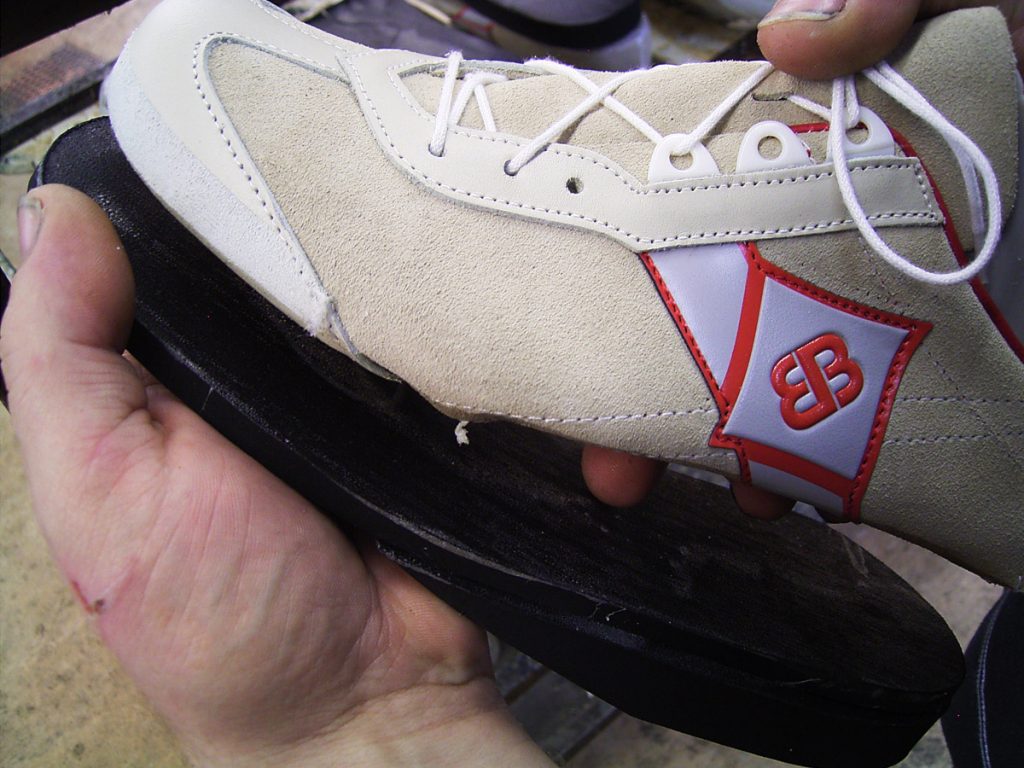
Handcrafted goods in Germany come at a price — but they also guarantee years of enjoyment. © Brütting
More contributions
Durability: Design with a Long-Term Approach
In this series, we would like to present products that have stood the test of time on the market for decades. We wish to analyse which factors, materials and properties have contributed to an item being able to demonstrate exceptional durability in both functional and aesthetic terms — and not least in economic and ecological respects.
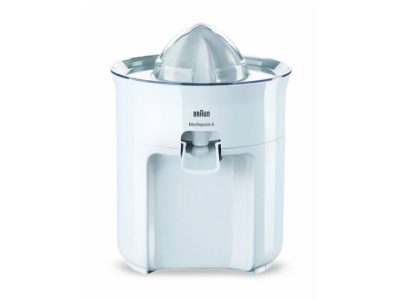
‘Runs and runs and runs…’, the Braun citromatic MPZ 2 from 1972
This small, unspectacular citrus juicer, made by the Braun brand, has been manufactured unchanged for over fifty years. There are many others available on the market, with different technologies on offer for separating the juice of oranges or other citrus fruits from the rest. Long-lasting technology meets long-lasting design. And that still applies to sales today.
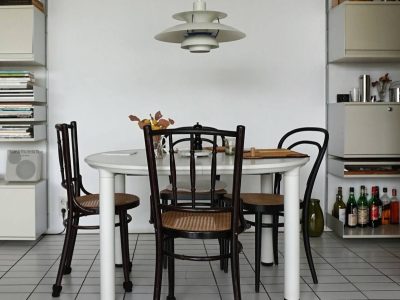
A shining example of long-lasting design: the PH5
The design of luminaires undoubtedly offers a substantial level of freedom. From a technical perspective, the relatively straightforward task of directing light in a fairly focused manner does not require great complexity. However, it is precisely this creative freedom that has led to decades of designs featuring an abundance of extravagant, experimental, or unnecessarily dynamic luminaires.
/magazin/texte/road-runner/
