

A shining example of long-lasting design: the PH5
Gerrit Terstiege
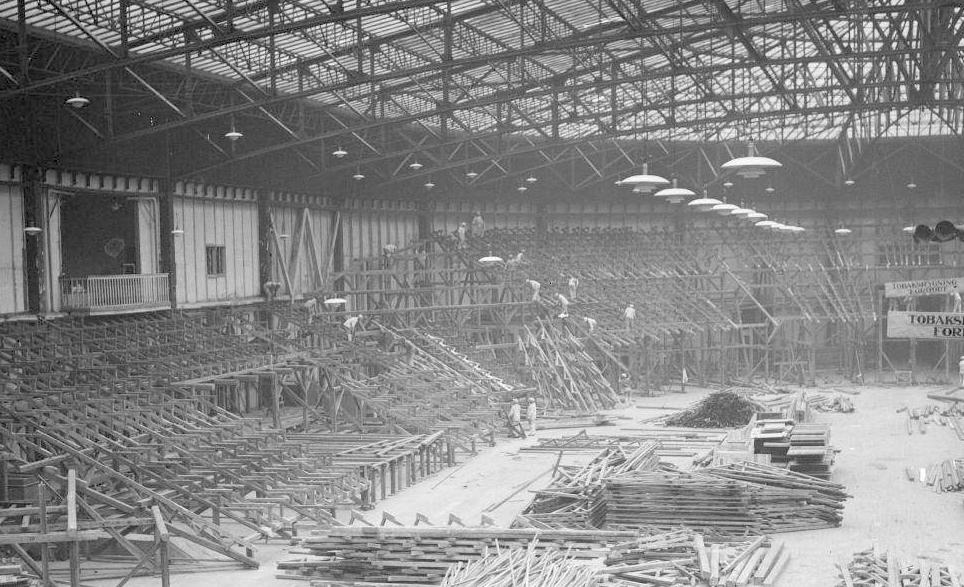
Preparation for a bicycle race in Forum Copenhagen. Photo: public domain
For other events too, for instance a bicycle race in that hall, the lights mounted metres high were presumably only of limited value. Why? Their design, comprising three staggered shades, does not allow large areas to be lit, instead it is more suited towards offering pleasant, glare-free light in living areas, such as above dining tables. This was the key innovation and principal design concept of Poul Henningsen (1894–1967), whose initials can still be found on his PH lamp series today. At the age of 16, Henningsen already found recognition for an innovative bicycle concept. He did not complete his architecture studies at Copenhagen Technical College and the Technical University of Denmark. He sought to make a name for himself as an author and inventor, instead. As a journalist, he was quick to understand the social impact of architectural designs and criticised, for example, the short-term thinking in Copenhagen’s urban planning.
When considering his many lighting designs, most of which feature a concentric structure of staggered shades, not every model may be convincing from today’s perspective. In some of his models, the idea of shading using cascades of sheet metal is taken to almost absurd extremes with their particularly expansive and sculptural qualities. His Paris Lamp, which was presented at a trade fair in the French capital in 1925, demonstrates precisely what makes his PH5 so ideal as a living room lamp, yet without the same understated calm and elegance. A pendant lamp in particular is not in use for much of the day—especially when daylight makes switching it on unnecessary. And this is where the image of the ‘English butler’ that is frequently used in connection with Braun’s design from 1955 comes into play, maintaining a discreet background presence when not needed. The PH5 is a brilliant example of this too. Nevertheless, a device that is not switched on remains visible. Therefore, the outer form of a product still performs a functional role when it is not in use. This is clearly illustrated by photos of the lamp above the Vitsœ 720 dining table in the home of Rams.
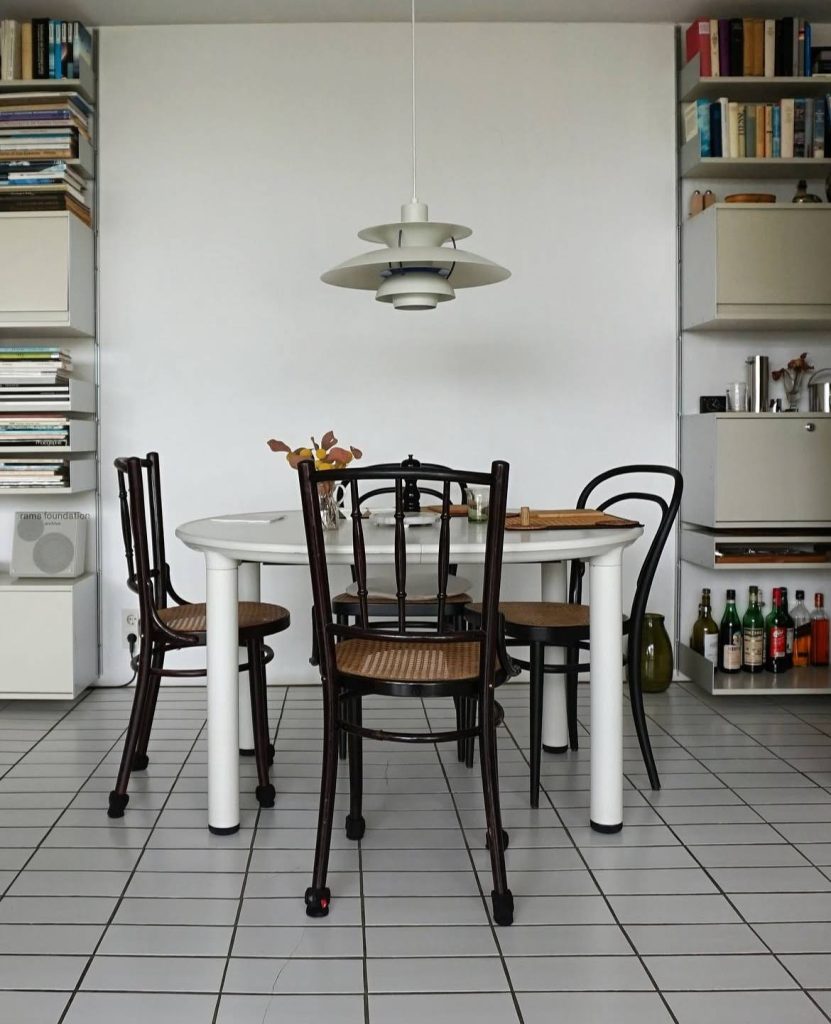
The PH5 in the Rams House above the Vitsœ 720 dining table.
Photo: Cassandra Peters © rams foundation
It has been in use there for decades, and replacing it with a fashionable, contemporary lighting design seems totally inconceivable. The conscious decision to opt instead for high-quality, durable products in the Rams household is reflected in numerous aspects. Moreover, the openness with which Dieter and Ingeborg Rams have allowed their private living spaces to be photographed over many years has meant that their approach to durable design has long been regarded as exemplary—worldwide. Anyone wishing to buy a PH5 for home use can still find a wide range of colour options on offer from Louis Poulsen. Alternatively, well-preserved second-hand models can be sourced from dealers such as Yasmin and Frank Mevissen. Incidentally, the name of their vintage design shop, „Achtgrad”, is a reference to the Braun audio 308 system designed by Dieter Rams and produced from 1973 onwards, which has a control panel that is tilted at an angle of eight degrees. But that’s another story.
More contributions
Durability: Design with a Long-Term Approach
In this series, we would like to present products that have stood the test of time on the market for decades. We wish to analyse which factors, materials and properties have contributed to an item being able to demonstrate exceptional durability in both functional and aesthetic terms – and not least in economic and ecological respects.
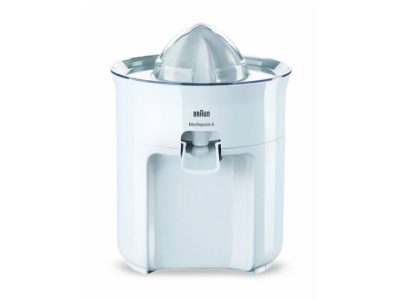
‘Runs and runs and runs…’, the Braun citromatic MPZ 2 from 1972
This small, unspectacular citrus juicer, made by the Braun brand, has been manufactured unchanged for over fifty years. There are many others available on the market, with different technologies on offer for separating the juice of oranges or other citrus fruits from the rest. Long-lasting technology meets long-lasting design. And that still applies to sales today.
Less, but better: Dieter Rams’ first exhibition in China
In partnership with the Beijing Contemporary Art Foundation (BCAF), our touring exhibition Less, but better: Dieter Rams’ first exhibition in China is travelling to one of the most important production sites for world trade and therefore to one of the centres where sensible design is given a high priority—the Middle Kingdom.
