

‘Runs and runs and runs…’, the Braun citromatic MPZ 2 from 1972
Klaus Klemp
This small, unspectacular citrus juicer, made by the Braun brand, has been manufactured unchanged for over fifty years. There are many others available on the market, with different technologies on offer for separating the juice of oranges or other citrus fruits from the rest. When it comes to the technology of this juicer, the old VW Beetle advertising slogan holds true, which incidentally is also an extremely long-lasting design: ‘It runs and runs and runs and runs and runs …’. Long-lasting technology meets long-lasting design. And that still applies to sales today.
Braun, which was founded in Frankfurt am Main in 1921, acquired the Spanish household appliance manufacturer Industrias Pimer S.A. near Barcelona in 1962 and restructured it as Braun Española. From then on, the design aspect has predominantly originated from Kronberg in the Taunus region. However, the constructor and designer Gabriel Lluelles Rabadà was also brought on board. Having long had a local presence, he helped to oversee one of Braun’s most successful kitchen appliances. The citromatic juicer, which was developed at the end of the 1960s, features remarkably efficient and robust technology that bears witness to Spanish engineering expertise. When pressing half an orange down hard on the juicing cone, the appliance does not rotate on its work surface but remains firmly in place during operation. These appliances have been in popular use over decades. They were initially developed specifically for the Spanish market, in order to reach the many bars and cafés in the country. In fact, this exceptionally well-designed appliance, which looks like a blunt column with a projecting Doric capital, can still be found on many bars today. It was primarily created by the Braun designers Jürgen Greubel and Dieter Rams. The spout and the large juicing cone with its transparent ‘Snow White’s Coffin’ cover clearly indicate what this appliance is intended for: freshly squeezed orange juice. The squeezed orange peels can also be stacked in the removable acrylic cover, which was created by the Barcelona designer Gabriel Lluelles in the absence of the German designers. His idea was for a pot-shaped, cylindrical cover, which, when placed upside down on the work space, would serve as a convenient container for several orange peels. This is how it was initially produced. However, from an aesthetic perspective, the appliance looked rather clumsy. Dieter Rams was obliged to intervene with the management so that the ‘pot’ was replaced by a ‘dome’. Placed side by side, the two versions show what a difference such a detail can make aesthetically.
In addition to its visual longevity, the citrus juicer is also notable for its self-explanatory design. It does not require a switch. Instead, pressure on the juicing cone sets it in motion. As with the MP 50 press created two years earlier, the housing cylinder under the spout is concave so that a glass can be intuitively positioned in the right place and be filled into its centre. Dieter Rams recalls that the presses were meant to be placed directly on hotel breakfast tables so that guests could make their own juices. This ultimately did not come to pass, as twenty or thirty presses operating in one room would have made an immense amount of noise. However, they were easy to use, even by children for whom such an ‘orange press orchestra’ would certainly have been a source of great pleasure.
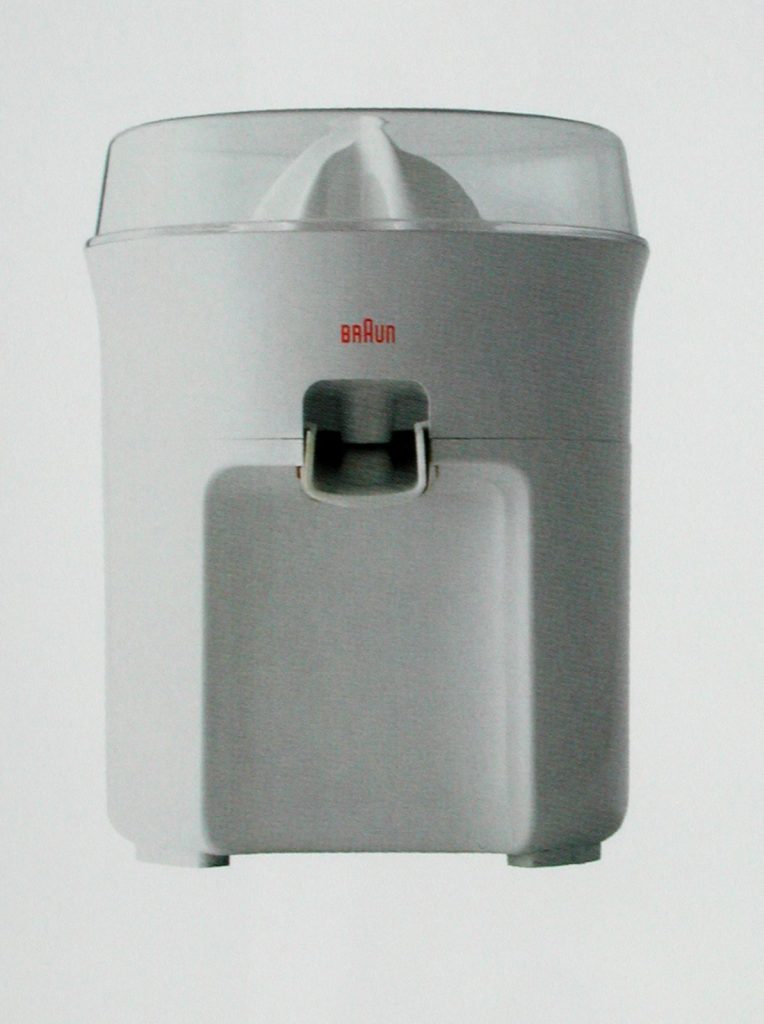
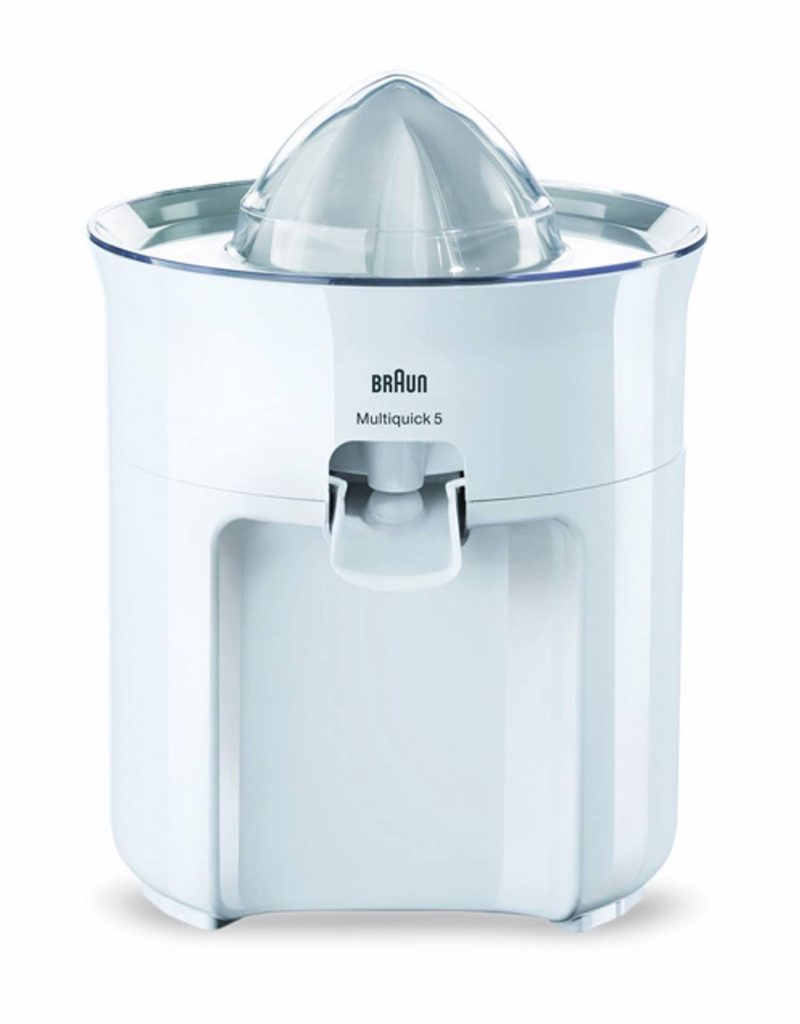
Citrus juicer Citromatic MPZ 2 / 21 / 22, since 1972, design by Jürgen Greubel and Dieter Rams together with Gabriel Lluelles, white plastic housing with acrylic glass cover. On the left, the first model with a "pot lid", on the right, the model with the "dome lid" designed by Dieter Rams.
© rams foundation
More contributions
Durability: Design with a Long-Term Approach
In this series, we would like to present products that have stood the test of time on the market for decades. We wish to analyse which factors, materials and properties have contributed to an item being able to demonstrate exceptional durability in both functional and aesthetic terms – and not least in economic and ecological respects.
A shining example of long-lasting design: the PH5
The design of luminaires undoubtedly offers a substantial level of freedom. From a technical perspective, the relatively straightforward task of directing light in a fairly focused manner does not require great complexity. However, it is precisely this creative freedom that has led to decades of designs featuring an abundance of extravagant, experimental, or unnecessarily dynamic luminaires.

Less, but better: Dieter Rams’ first exhibition in China
In partnership with the Beijing Contemporary Art Foundation (BCAF), our touring exhibition Less, but better: Dieter Rams’ first exhibition in China is travelling to one of the most important production sites for world trade and therefore to one of the centres where sensible design is given a high priority – the Middle Kingdom.
